Script-first creator
You have finished copy and want to hear how it works as spoken content before refining the final version.
Start with speechma text to voice to keep the test centered on your script and its delivery.
Comparison guide
This speechma vs ai voices comparison focuses on decisions you can actually make: how you want to work, what you need to review, and when a different voice workflow may be more suitable.
Speechma is the better starting point when you want a direct voice workflow to test. Broader AI voice tools may suit projects that need more control, variation, or production steps, but the right choice depends on the task.
A fair comparison should separate what is known from what still needs testing. The points below keep the decision useful without treating either category as a universal winner.
Voice preference is personal, and a written description cannot replace listening to the same passage in the voices you are considering.
What to do instead
Test a representative script and judge clarity, tone, pacing, and consistency side by side.
AI voice tools vary in how they expose voice selection, pronunciation handling, pacing, and revision controls.
What to do instead
List the controls your project needs before choosing a workflow.
A convincing sample does not automatically answer questions about editing, approvals, file handling, or repeated updates.
What to do instead
Run one complete project from draft script through final review.
The phrase speechma vs ai voices describes a broad decision, not one fixed benchmark with identical inputs and outputs.
What to do instead
Use the same short brief, script, and acceptance criteria in each workflow.
The simplest choice is usually the one that matches the job already in front of you. Start with the output and review process, then decide how much experimentation you need.
Write down whether you need spoken audio, a voice track for video, or a repeatable text-to-voice process.
Use the same script, pronunciation notes, and intended audience so the comparison measures workflow fit rather than changing inputs.
Keep the workflow that gives you a reviewable result with the least unnecessary complexity for this project.
Moving between Speechma and wider AI voice workflows does not have to mean restarting from zero. Preserve the brief, script, pronunciation notes, and review criteria so each test teaches you something.
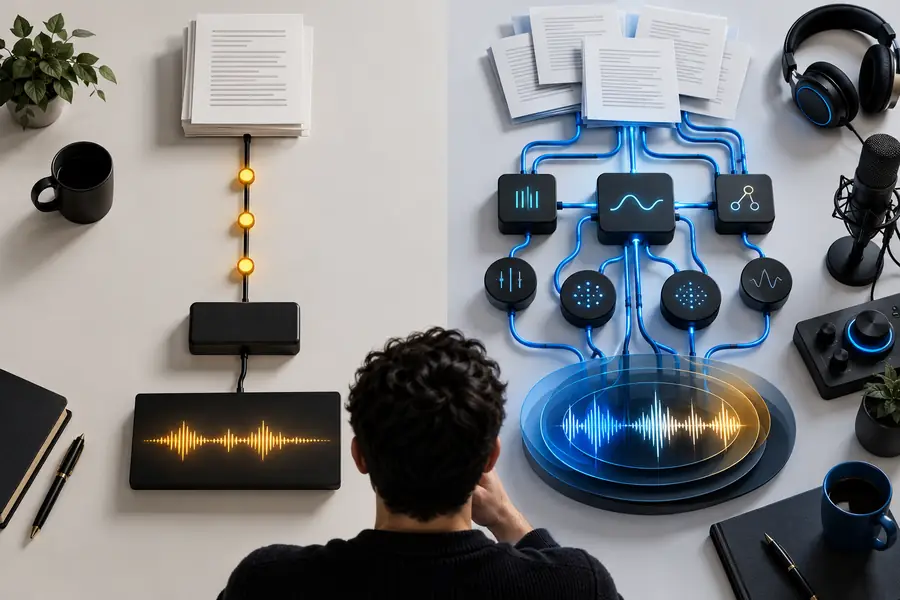
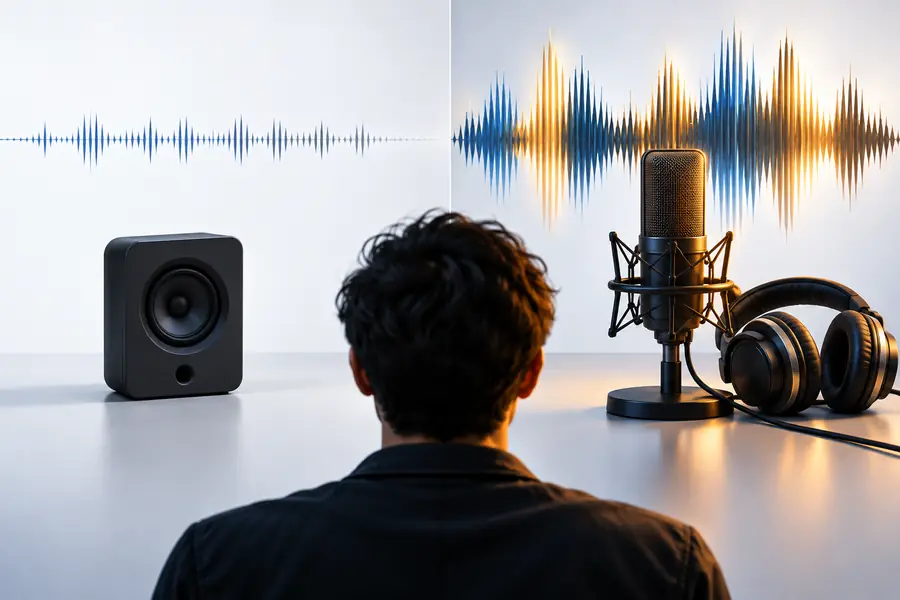
Keep the same script and review notes when switching paths.
Focused comparisonExpanded workflowUse this table as a planning aid rather than a claim that one category wins every project. Speechma is most useful to assess as a focused starting point, while AI voices describes a broader class of workflows.
| Speechma | AI voices | |
|---|---|---|
| Starting point | A focused route for exploring Speechma voice workflows. | A broad category covering different voice-generation approaches. |
| Best first question | Can this direct workflow support the voice result I need? | Which tool and control set best matches the project? |
| Workflow complexity | Suitable for beginning with a clear, limited task. | May involve more choices, settings, or production decisions. |
| Evaluation method | Try a representative script and listen for fit. | Compare several tools using the same script and criteria. |
| Useful for | People who want to assess Speechma without starting with a large tool search. | Teams that need to investigate a wider range of voice workflows. |
| Main tradeoff | A narrower starting point may leave some wider options unexplored. | More options can require more time to test and standardize. |
| Decision signal | The result is clear, usable, and easy to review for the intended task. | The additional control or range produces a meaningful project benefit. |
Different users arrive at the speechma vs ai voices question for different reasons. These examples connect the decision to a more specific Speechma workflow.
You have finished copy and want to hear how it works as spoken content before refining the final version.
Start with speechma text to voice to keep the test centered on your script and its delivery.
You are evaluating whether a Speechma voice workflow fits the tone and pacing of a recurring project.
Review speechma ai voice as a focused next step before comparing a wider set of AI voice options.
Your main concern is the spoken audio asset and how it will be checked, revised, and placed into a project.
Use speechma audio to think through the output as an audio workflow rather than only as a voice sample.
The voice is one part of a larger visual piece and needs to be considered alongside the video workflow.
Explore speechma video when the final decision depends on how the voice supports the complete video project.
A useful decision comes from trying the same realistic brief, not from collecting abstract feature lists. Open Speechma, test a representative passage, and keep the review criteria you would use for the finished project.
Speechma is a specific route or product context, while AI voices is a broader category of voice-generation workflows. The practical difference is whether you want to start by testing Speechma directly or investigate several possible approaches.
Not automatically. The better choice depends on the script, voice qualities, controls, review process, and output needs of your project, so a matched sample is more useful than a general ranking.
Speechma is a sensible starting point for someone who wants to assess a focused voice workflow without beginning with a broad search across many tools. Start with a representative script and decide whether the result fits the intended use.
Consider a wider workflow when your project needs controls, voice variety, or production steps that your initial Speechma test does not address. Keep the same script and acceptance criteria so the expansion remains a fair comparison.
Use the same text, pronunciation notes, audience, and review standards in each test. Listen for clarity, tone, pacing, consistency, and how easily the result can move into the rest of your project.